Smart Search · E-commerce · Applied AI
Semantic search for e-commerce
A search platform that understands what shoppers mean. An LLM pipeline processes the catalog, and natural-language queries become structured filters.
- Role
- Technical lead of a two-developer team; built the whole frontend
- Period
- Dec 2025 — Jul 2026
- Link
- Project page ↗
The challenge
Keyword search breaks down exactly when shoppers describe what they need instead of naming the product. The goal was a search that understands intent and respects hard constraints (price, category, attributes) without making results up.
What we built
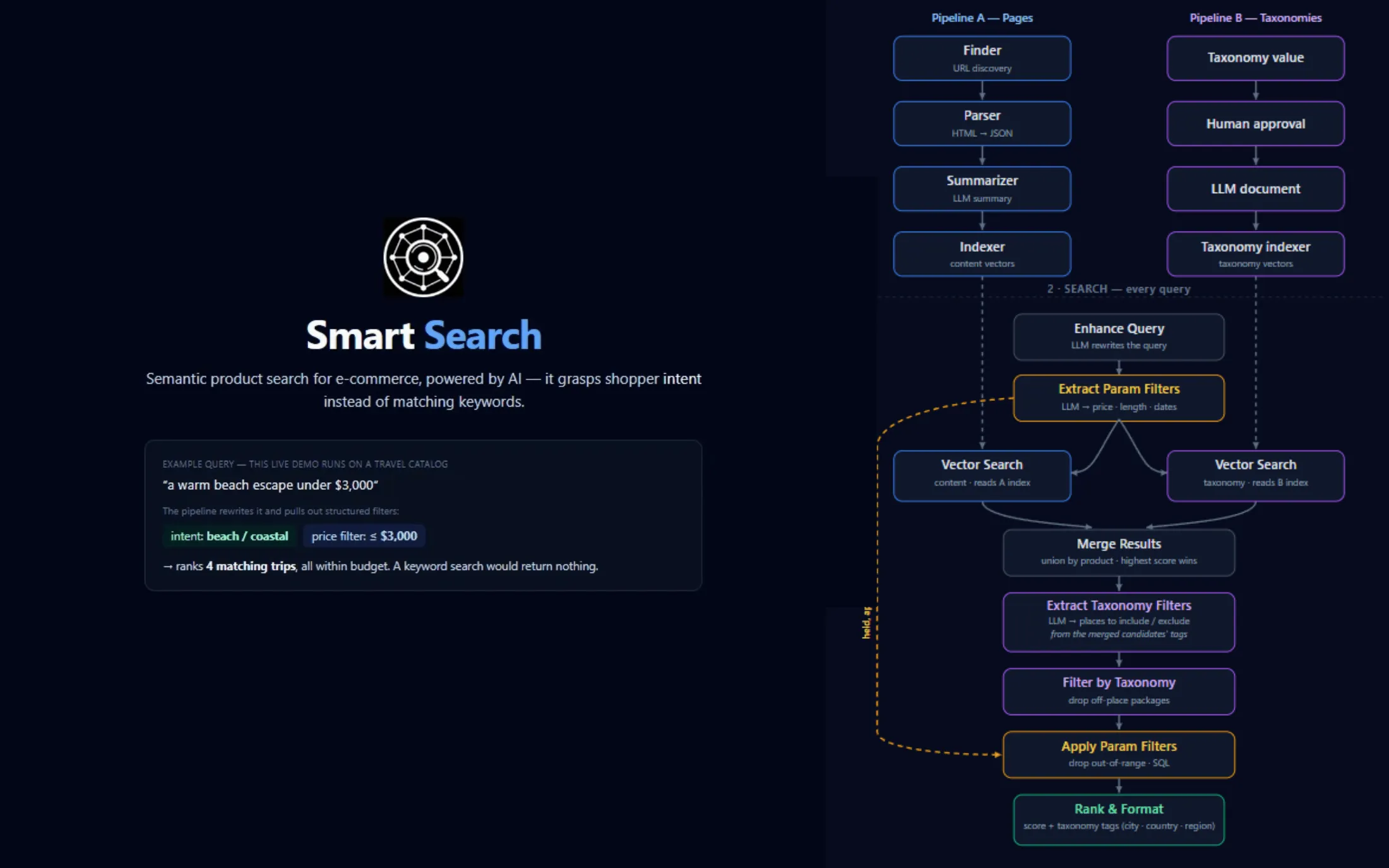
- Five-stage content pipeline: URL discovery, HTML-to-structured-JSON parsing, LLM summaries, vector indexing in Pinecone, and search.
- Hybrid search: vector similarity plus LLM query enhancement and structured filter extraction from natural language, combined with database filters. Fully async, with fallbacks on errors.
- Human-in-the-loop taxonomies: the LLM proposes a hierarchical classification of the catalog and a person approves it before it goes live.
- Model-agnostic: OpenRouter as the gateway, so switching providers is a config change. Tracing in LangSmith.
- Admin dashboard in React and TypeScript: accounts, pipeline metrics, interactive search and taxonomy approval.
- WooCommerce plugin: semantic search over the store’s catalog, re-indexing in the background whenever a product changes.
Quality
A FastAPI API with auto-generated OpenAPI docs and standard error responses (RFC 7807), around 126 pytest test files, 50+ endpoints covered by API tests, and Sentry monitoring.
Screenshots
Dashboard: pipeline metrics
Taxonomy approval